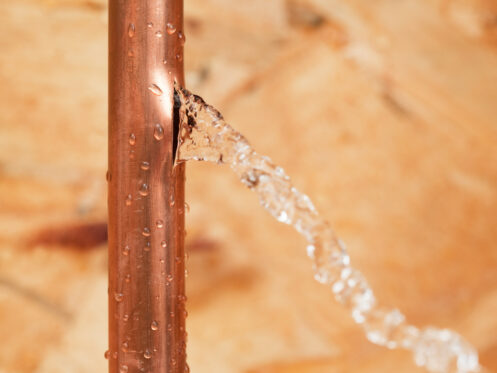
Plumbing leaks don’t always announce themselves with a puddle on the floor or water dripping from the ceiling. In many California homes, the most damaging leaks remain hidden behind walls, under slabs, or inside cabinets for months before becoming obvious. By the time you notice visible damage, the repair often costs far more than it would have if you found the problem early.
Why Hidden Plumbing Leaks Are So Common in California Homes
California homes face unique plumbing challenges. Many properties sit on concrete slabs, which means water lines often run beneath the foundation. A small leak under the slab can go unnoticed while water slowly erodes soil or seeps upward into the flooring. Older homes across the state may still have aging galvanized pipes, copper lines with pinhole corrosion, or outdated fittings that fail quietly over time.
Water pressure fluctuations, seismic activity, and mineral-heavy water in some regions also stress plumbing systems. These factors increase the likelihood of slow leaks that don’t immediately trigger alarms. Since California homeowners often focus on drought concerns and conservation, a leak that wastes water behind the scenes can go unnoticed longer than expected.
Unexplained Increases in Your Water Bill
One of the earliest and most reliable signs of a hidden plumbing leak is a sudden rise in your water bill. If your usage habits have not changed but your bill keeps climbing, water is likely escaping somewhere in the system.
Hidden leaks can waste hundreds of gallons per month without obvious signs inside the home. Slab leaks, underground line leaks, and slow pipe failures inside walls often show up on your bill long before you see visible damage. Comparing monthly statements and watching for unexplained spikes gives you an early warning that something is not right.
The Sound of Running Water When Nothing Is On
Your home should be quiet when all fixtures are off. If you hear water moving through pipes when no faucets, appliances, or irrigation systems are running, a leak may be present. This sound often comes from water flowing through a damaged supply line or escaping from a cracked pipe behind walls or under floors. When your home is quiet, this symptom becomes easier to notice. Ignoring it allows the leak to continue unchecked, increasing the risk of water damage.
Persistent Musty or Damp Odors
Hidden plumbing leaks create constant moisture, which leads to musty smells that do not go away with cleaning. If you notice a damp odor in a bathroom, kitchen, laundry room, or hallway with no obvious source, water may be leaking behind the wall or under the floor. In California’s varied climate zones, indoor humidity can already fluctuate, but persistent odors usually point to trapped moisture. Over time, this environment encourages mold and mildew growth, which can affect indoor air quality and trigger health concerns.
Discoloration on Walls, Ceilings, or Floors
Water has a way of revealing itself eventually. Yellow or brown stains on walls and ceilings often indicate slow leaks that have been soaking drywall for some time. Bubbling paint, peeling wallpaper, or soft spots in walls and floors are also common warning signs. In slab-on-grade homes, leaks may show up as warm spots on the floor, cracked tiles, or areas where flooring suddenly lifts or warps. These symptoms often appear long after the leak begins, making early detection critical.
Mold or Mildew That Keeps Coming Back
Surface mold in bathrooms can sometimes result from poor ventilation, but mold that repeatedly returns after cleaning often points to a hidden moisture source. Plumbing leaks provide a constant supply of water that mold needs to thrive. California homeowners should take recurring mold seriously, especially if it appears in unusual areas. Addressing the visible mold without fixing the leak allows the problem to return and worsen.
Reduced Water Pressure Throughout the Home
A hidden leak can divert water away from fixtures, resulting in lower water pressure. If you notice a gradual or sudden drop in pressure across multiple faucets, showers, or appliances, a leak may be affecting your main supply line. Pressure issues caused by leaks often feel inconsistent. You might notice strong flow at times and weak flow at others, depending on how water escapes the system. This symptom can easily be mistaken for a municipal supply issue, which is why professional evaluation matters.
Warm Spots on Floors or Unexplained Temperature Changes
In homes with hot water lines under the slab, a leak can cause warm areas on the floor. This often feels like a patch of heated tile or concrete when the rest of the floor remains cool. These warm spots usually accompany higher energy bills, as the water heater works harder to maintain the temperature. Left untreated, slab leaks can undermine the foundation and lead to major repairs.
Cracks in Foundation or Flooring
While cracks can form for many reasons, ongoing water leaks under a slab can contribute to soil movement and foundation stress. As water erodes soil beneath the foundation, it creates voids that allow concrete to shift or crack. If you notice new cracks with other signs, such as higher water bills or warm flooring, it’s important to investigate further. Plumbing issues and structural damage often connect in ways that are not obvious.
Cabinets, Baseboards, or Trim That Feel Soft or Swollen
Water doesn’t always drip onto the floor. It can soak into wood slowly, causing swelling, warping, or softness over time. Cabinets under sinks and baseboards near bathrooms or kitchens are especially vulnerable. If you press on wood surfaces and they feel spongy or look distorted, moisture may be present behind them. This damage rarely improves on its own and often worsens quickly once it becomes noticeable.
Why Ignoring Hidden Leaks Gets Expensive Fast
Hidden leaks cause more than just water waste. They damage drywall, flooring, insulation, and framing. Over time, moisture weakens structural components and creates conditions for mold growth. In California, where many homes have slab foundations and tightly sealed interiors, these problems can escalate quickly. Insurance coverage for water damage often depends on how long the leak went unnoticed. Early leak detection gives you a better chance to limit damage and avoid coverage disputes.
How Professional Leak Detection Helps
Finding hidden leaks requires more than guesswork. At Big League Plumbing, we use specialized tools such as acoustic sensors, pressure testing, thermal imaging, and electronic detection to pinpoint leaks without unnecessary damage. Instead of blindly cutting into walls or floors, these methods allow targeted repairs that minimize disruption. Accurate detection also confirms whether the issue involves supply lines, drain lines, or fixtures.
Catch the Leak Before It Catches You
Hidden plumbing leaks rarely stay hidden forever. They leave clues long before they cause obvious damage, but those clues are easy to overlook. Proactive plumbing care isn’t just smart, it’s essential. [Company_name] is a family-owned company providing quality plumbing solutions for your home in the South Bay region of Southern California. If you notice any of these early signs or need repiping, contact us today.